
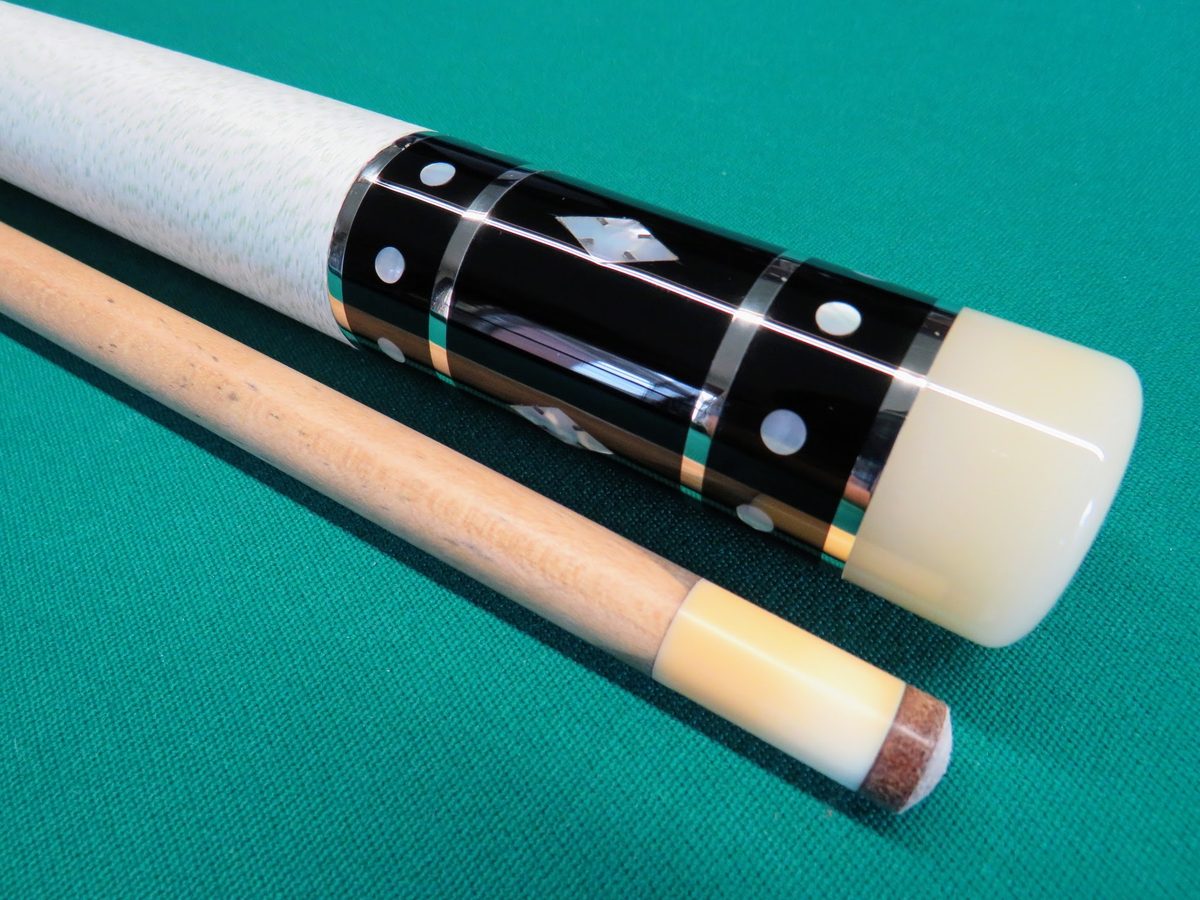
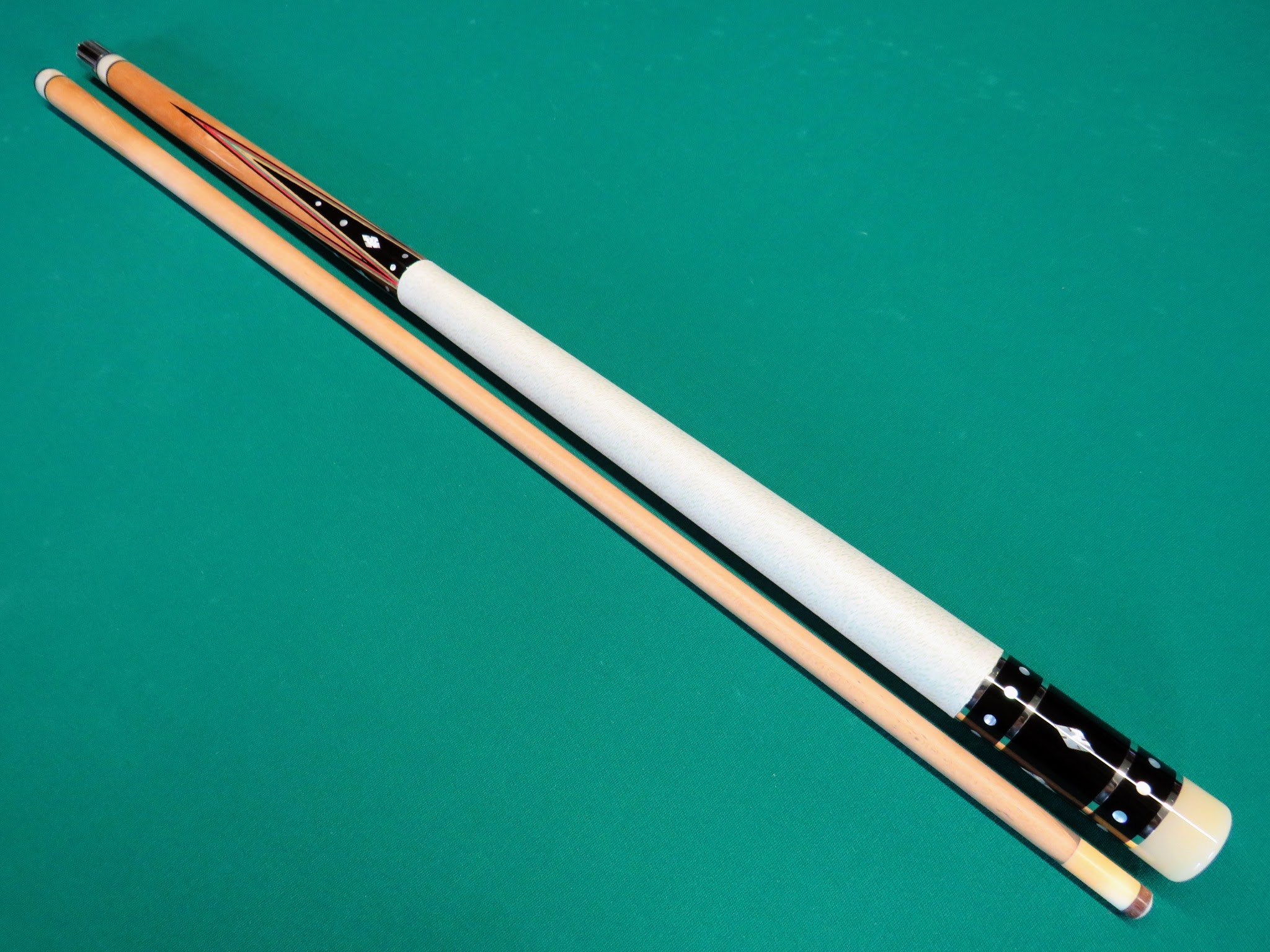
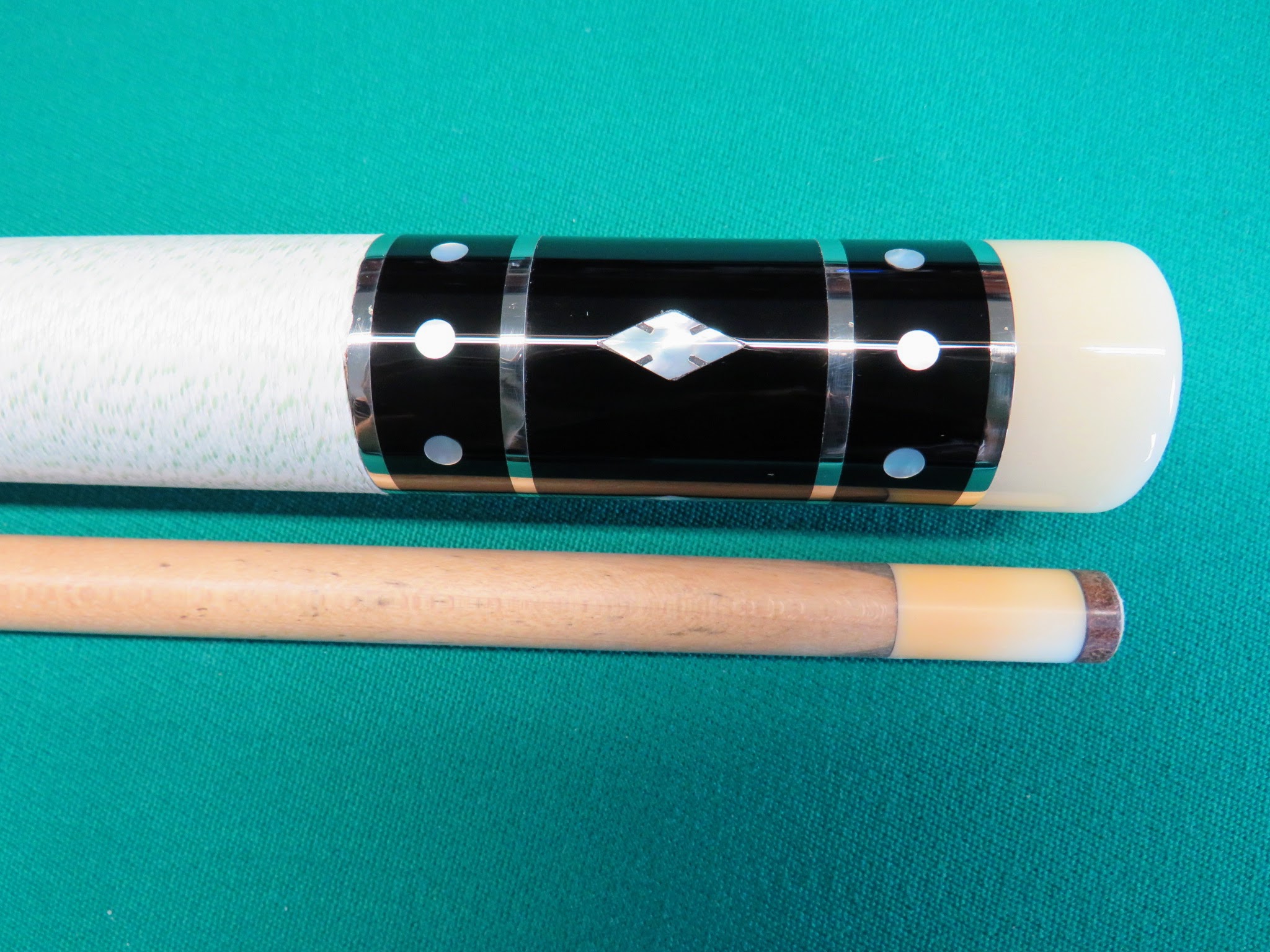
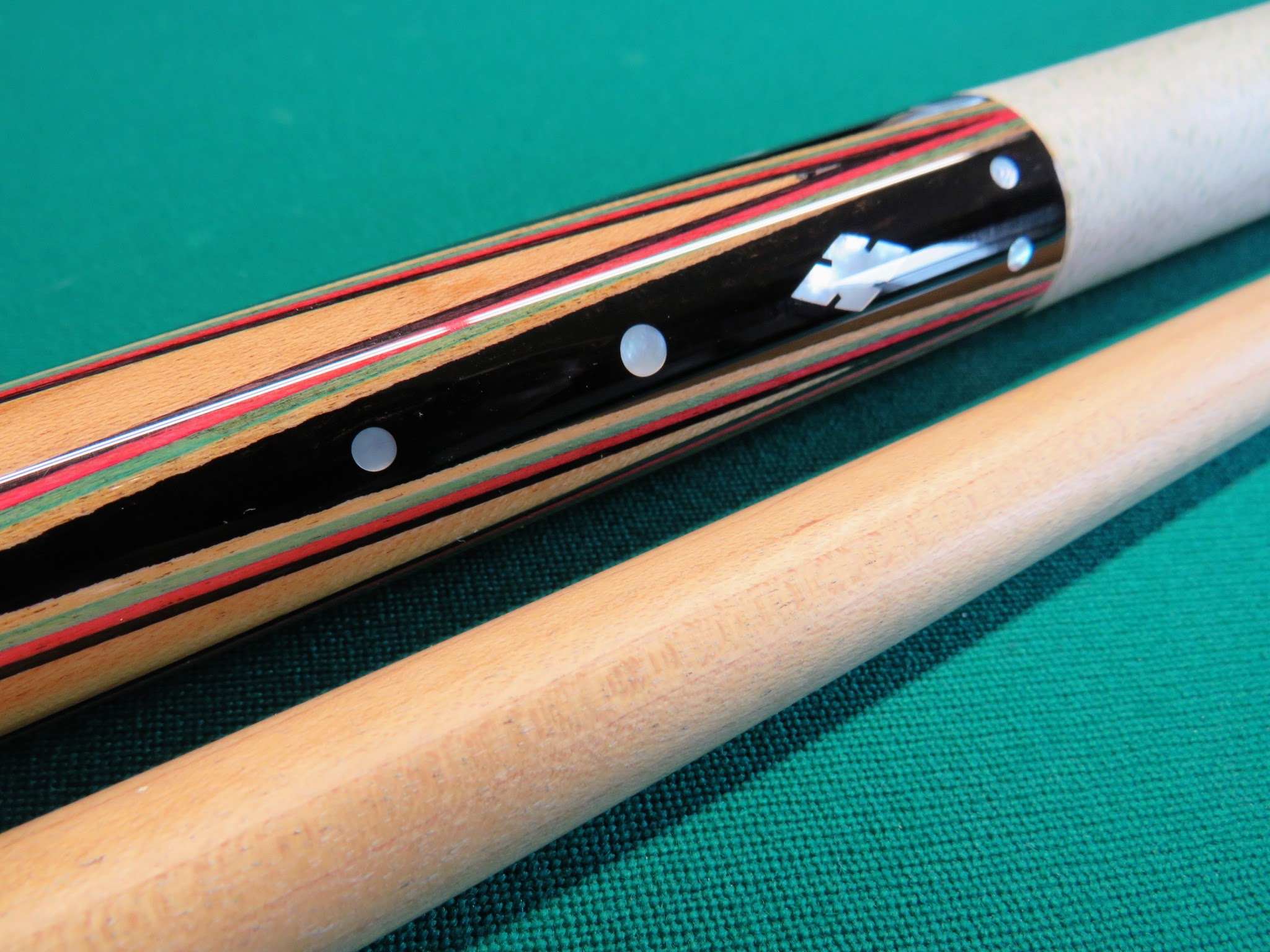
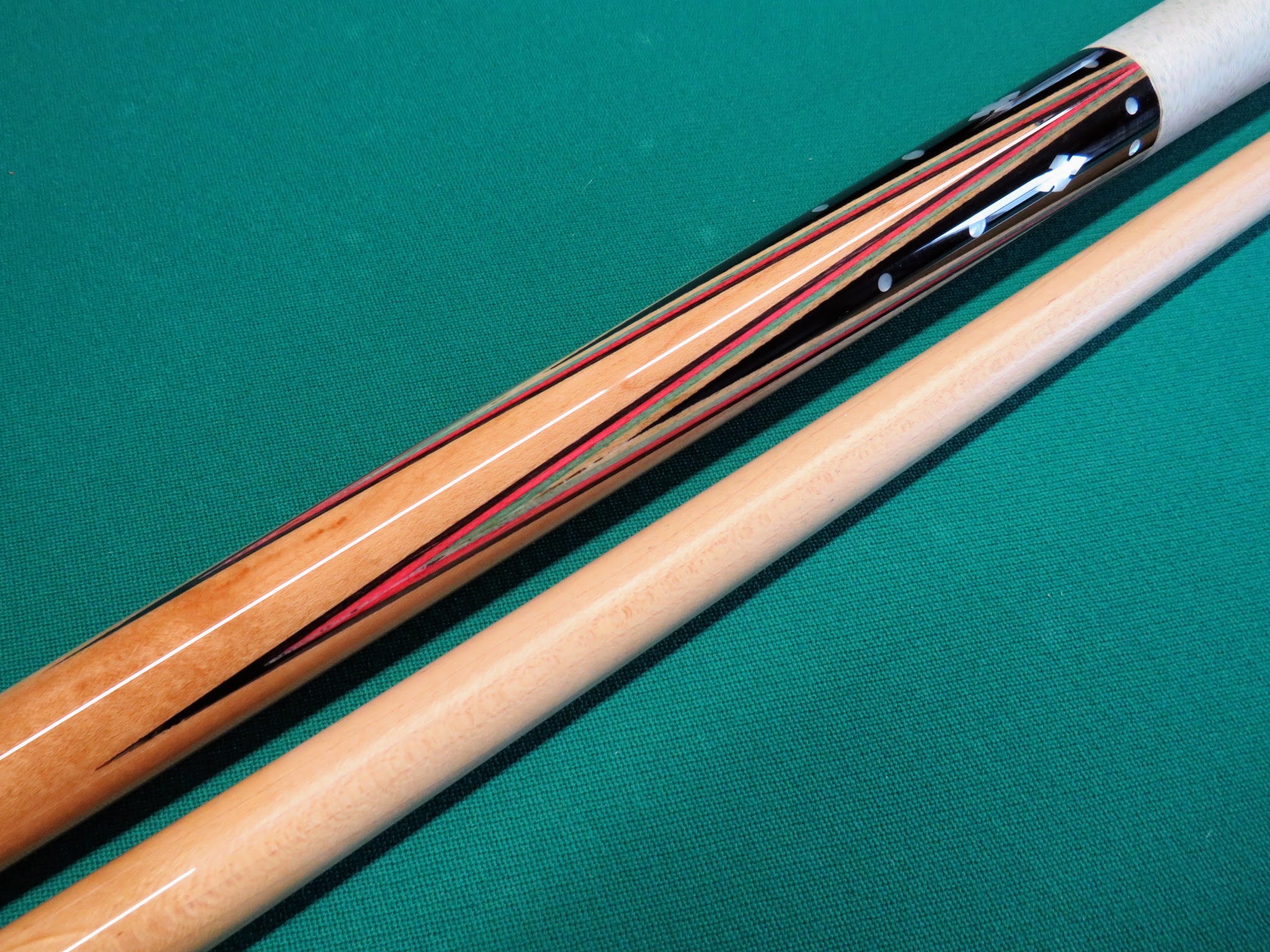
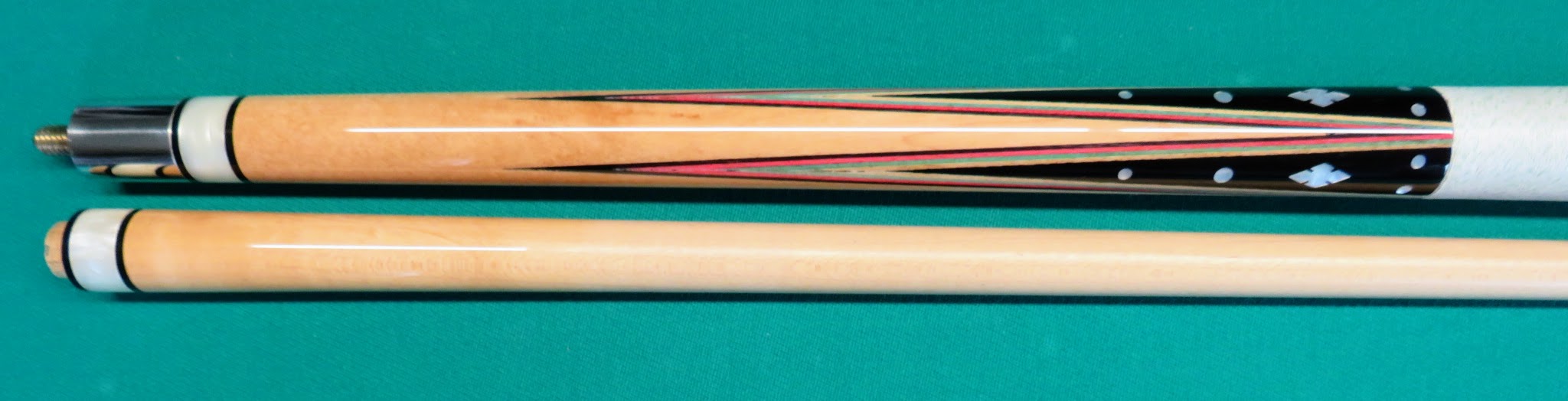
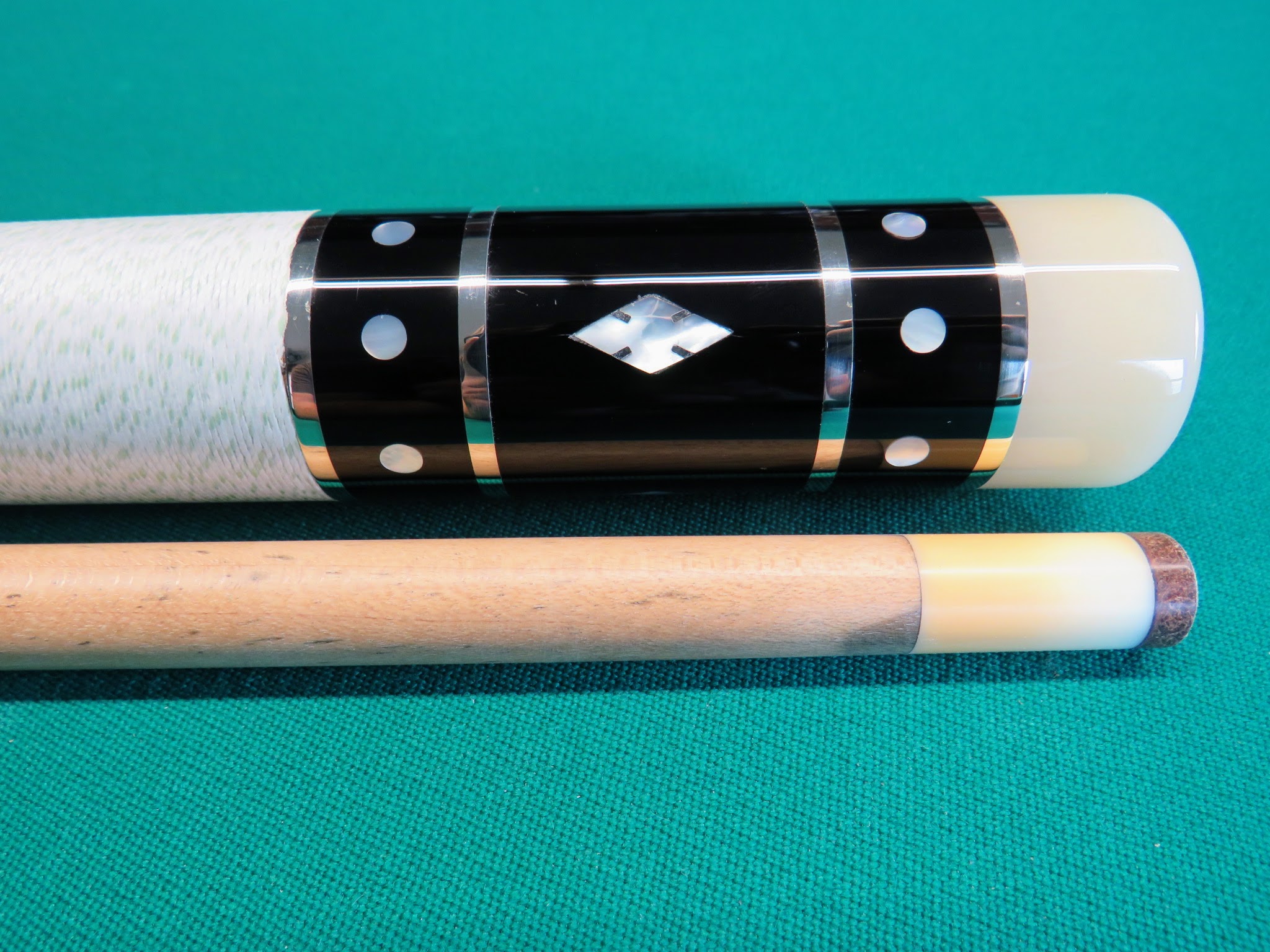
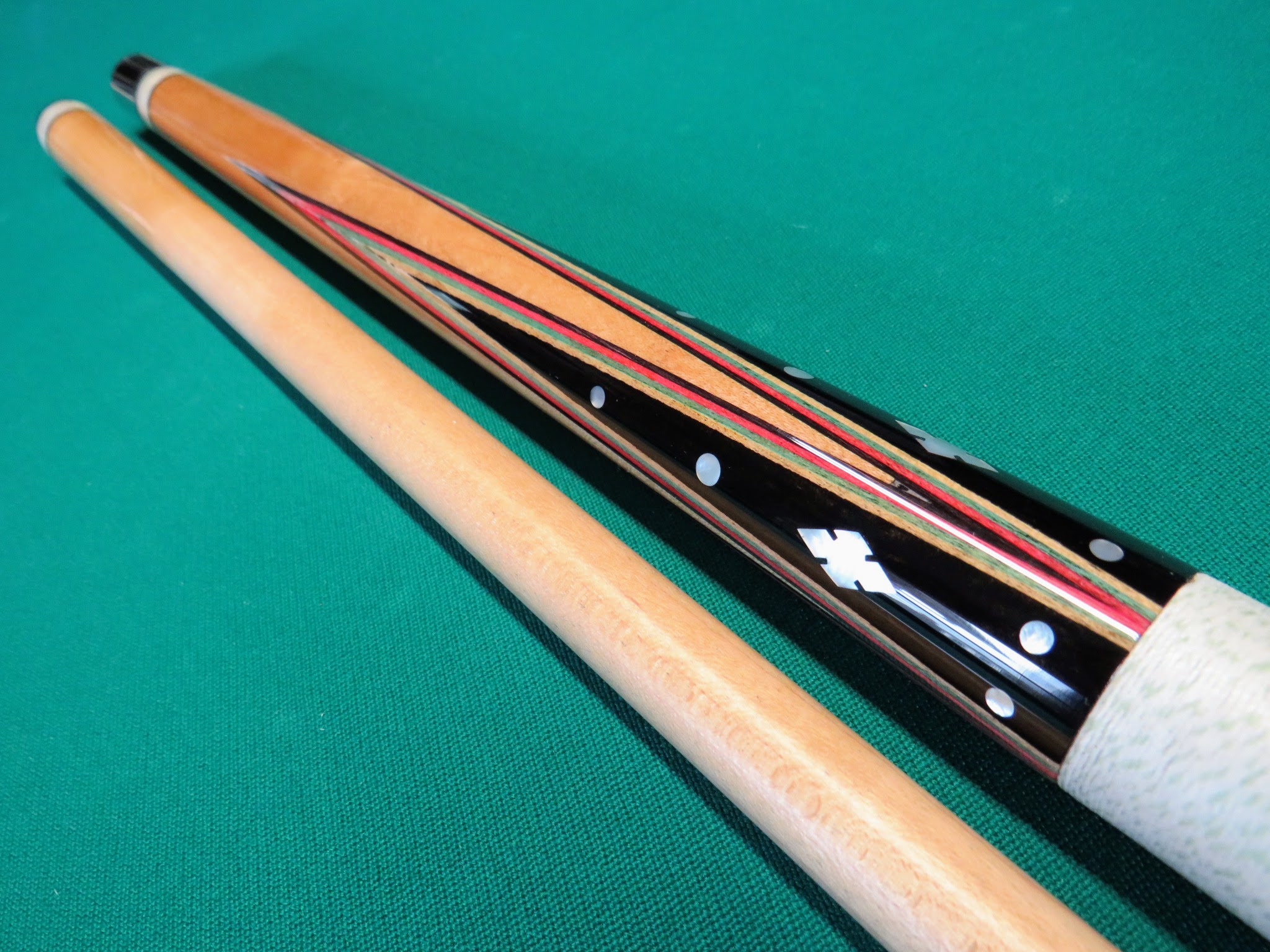
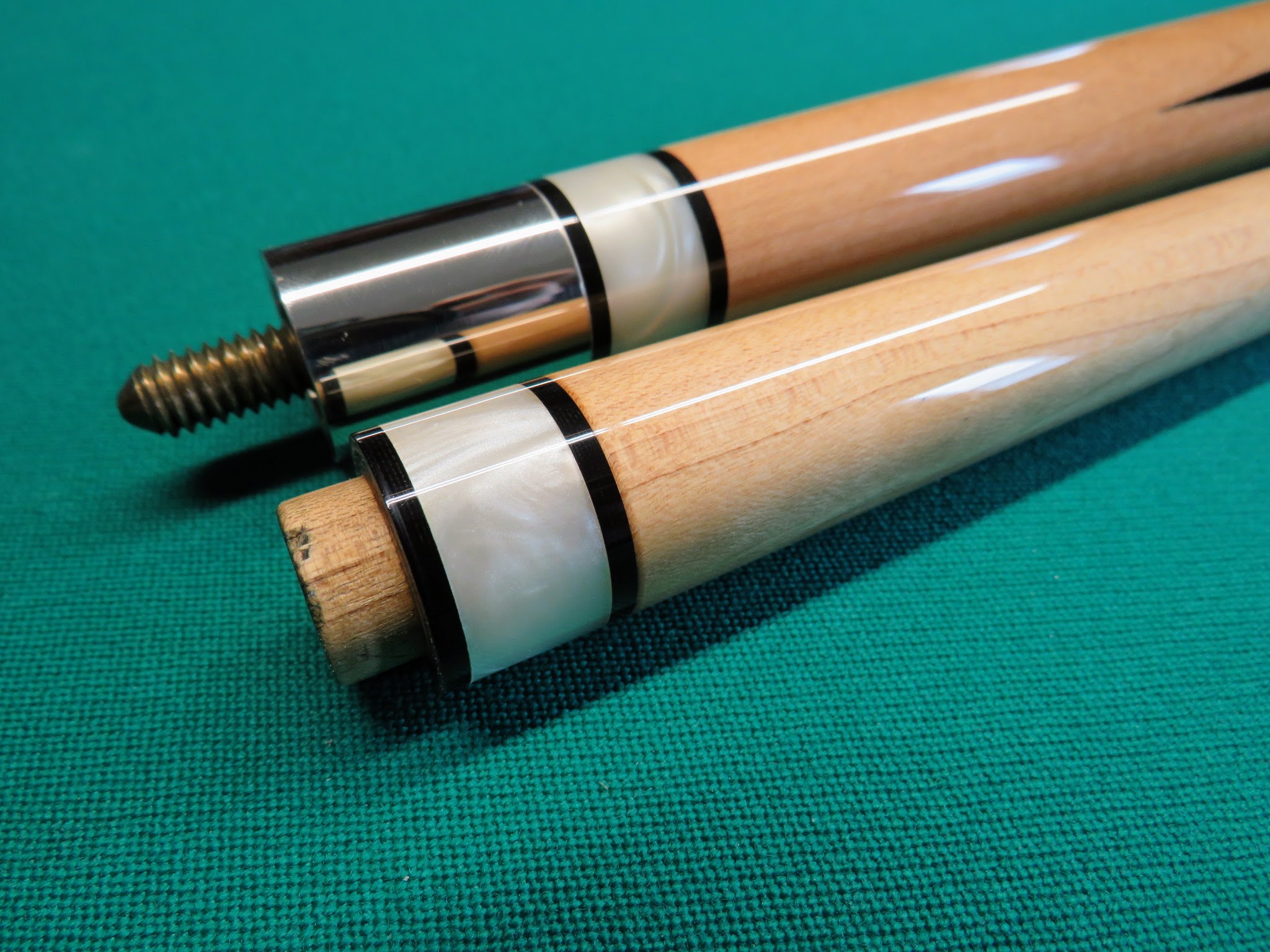
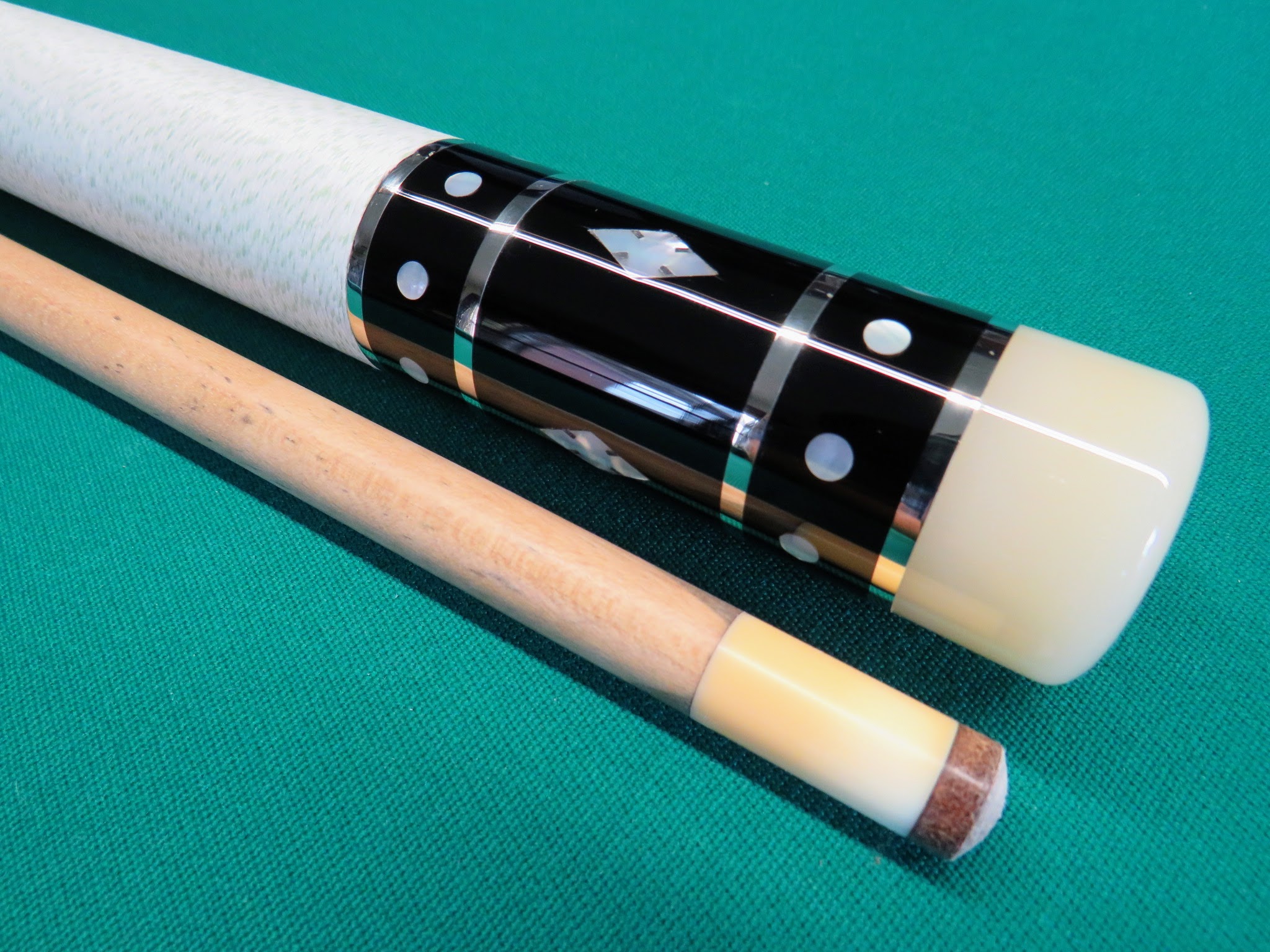
Palmer Catalog 1 Model 5
This Palmer catalog 1 model 5 is an example of finish work performed here at Proficient Billiards.
Palmer custom pool cues, founded in 1964 in Elizabeth, New Jersey by Eugene Balner, represent the golden age of mid-century American cue making. Known for their bold aesthetic flourishes—often compared to the “tail fins and bullet lights on old cars”—they are among the most passionately collected vintage cues in the billiards world.
Chronology & Catalogs
The original New Jersey custom era is traditionally broken down by its distinct catalog releases:
- The 1st Catalog (1965–1966): Began as a flyer featuring models lettered A through H, which quickly evolved into a numbered line (Models 1 through 11). These early cues frequently utilized full-splice “shorty” blanks from Burton Spain or Brunswick Titlists.
- The 2nd Catalog (Late 1960s – Early 1970s): Introduced legendary tribute and custom styles. Standouts include the Model C (a retro nod to Herman Rambow’s classic design), the Model J (reverse splice), and the flagship Model M (“Palmer Supreme”), recognized as one of the most famous cue designs ever created.
- The 3rd Catalog (1971 into the 1980s): The final and most elaborate line of custom designs, notable for shifting toward stainless steel joints and heavy pearl/tanged inlays. The Model 20, showcasing intricate ebony and pearl work, remains the holy grail for many Palmer enthusiasts.
- The PM and PB Production Lines (Late 1970s – 1980s): As the market shifted, Palmer transitioned into a distributor. They partnered with Adam Custom Cues in Japan to manufacture the PM (Pete Margo) and PB (Palmer Billiards) catalog lines. While high-quality production cues for their era, they hold significantly less value than the original New Jersey customs.
Key Identification Features
Because early Palmers were completely unmarked, identifying a true vintage custom relies on specific construction details:
- The Window: Many iconic models feature a clear acrylic/plexiglas window built into the butt sleeve. Authentic custom era cues often contain a piece of gold foil stamped with “Original by Palmer” or a personalized original owner’s name inside the window.
- Butt Caps: Later custom models moved away from windows and featured a blocky stamp reading “Palmer” or “Palmer Custom Cues” engraved directly on the butt cap.
- Design Accents: Look for distinct era-specific hallmarks like two-tone wraps, screw-on ferrules, large tanged mother-of-pearl inlays, and vibrant color wood veneers (often purple, green, and orange chartreuse).